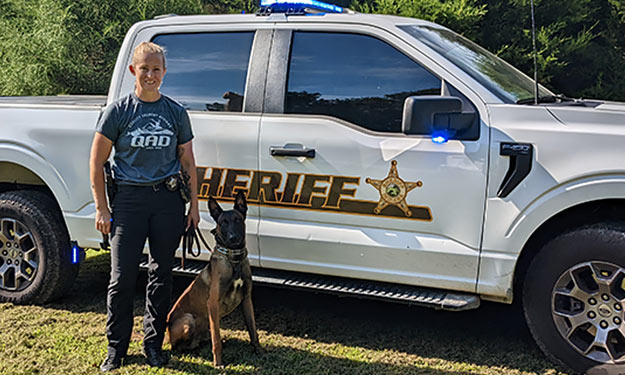
Becoming a police K9 instructor is not something that happens overnight. It is a career built on experience, discipline, and a deep understanding of working dogs. Police K9 instructors are responsible for preparing both dogs and handlers for real-world law enforcement situations, which means the role requires a high level of skill and professionalism.
For those considering this career path, it helps to understand the key abilities that successful police K9 instructors develop over time.
Strong Dog Training Fundamentals
At the core of the role is a solid foundation in professional dog training. Police K9 instructors must be confident in obedience training, behavior shaping, and building reliable responses in a variety of environments.
Working dogs are expected to perform under pressure, often in unfamiliar or high-stress situations. Instructors must know how to develop consistency, drive, and control in each dog while maintaining safety for everyone involved.
Knowledge of Working Dog Roles
Police dogs are trained for a wide range of tasks, and instructors must understand how those roles differ. Some dogs are trained for patrol and suspect apprehension, while others specialize in detection work such as narcotics, explosives, firearms, or tracking and trailing.
Each assignment requires different training methods, environmental exposure, and operational standards. A police K9 instructor must understand how to train dogs to perform reliably in real-world deployments, not just controlled training scenarios.
Handler Communication and Coaching Skills
A police K9 instructor is not just training dogs. They are also responsible for training handlers. That means strong communication and coaching skills are essential.
Handlers must learn how to read their dog’s body language, recognize alerts, apply proper deployment techniques, and understand K9 case law and safety procedures. Instructors must be able to explain these concepts clearly and guide teams through realistic training scenarios.
Real-World Problem Solving
Working dog training rarely follows a perfect script. Each dog has a different temperament, learning style, and level of drive. Police K9 instructors must be able to adapt their approach and solve problems as they arise.
This may involve adjusting training techniques, building a hesitant dog’s confidence, or helping a handler improve communication. Flexibility and critical thinking are key traits for long-term success in this field.
Professionalism and Consistency
Police K9 instructors work with law enforcement agencies that depend on reliable, well-trained dogs. Professionalism, consistency, and attention to detail are critical.
Training programs must follow realistic deployment and certification standards to ensure teams are prepared for real-world conditions. Instructors are responsible for maintaining those standards and ensuring that each dog and handler team is ready for operational work.
Start Your Path Toward Becoming a Police K9 Instructor
Most police K9 instructors begin their careers as professional dog trainers and gain experience working with patrol or detection dogs. A structured education helps build the technical skills and real-world understanding required for this level of responsibility.
Dog Trainer College offers professional police dog training programs that cover patrol work, suspect apprehension, tracking and trailing, and scent detection for narcotics, explosives, firearms, and other target odors. Training is designed around realistic deployment standards and includes both dog and handler education to prepare teams for safe, effective operations.
If you are serious about becoming a police K9 instructor, Dog Trainer College offers in-person and online programs that prepare students for real-world careers with working dogs. Contact us today at (800)795-4201 to learn more about upcoming police dog training courses and enrollment opportunities, and complete the online application.