
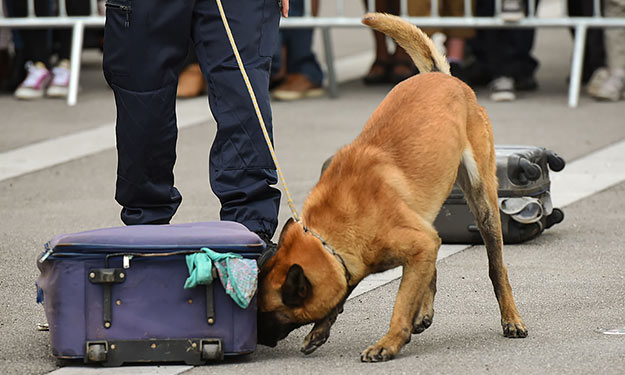
Detection dogs play an important role in law enforcement and security, helping locate substances and materials that might otherwise go unnoticed. Two of the most common specialties are narcotics detection and explosives detection. While both rely on a dog’s incredible sense of smell, the training methods, target odors, and real-world responsibilities can differ.
For students interested in becoming professional detection dog trainers, understanding these differences is an important part of preparing for a specialized career.
What Is Narcotics Detection Dog Training?
Narcotics detection dogs are trained to recognize the odors of specific controlled substances, such as cocaine, heroin, methamphetamine, and other drugs.
These dogs frequently work with law enforcement agencies, assisting with searches of vehicles, buildings, luggage, and other locations where illegal substances may be concealed.
Professional trainers must understand scent imprinting, search techniques, and how to develop reliable alerts. Depending on an agency’s needs, narcotics detection dogs may be trained to give either a passive alert, such as sitting, or an active alert, such as scratching.
Because narcotics detection often involves criminal investigations, trainers must also understand proper handling procedures, search protocols, and relevant legal considerations.
What Is Explosives Detection Dog Training?
Explosives detection dogs are trained to identify odors associated with explosive materials and related substances. These dogs may work with law enforcement, military personnel, or security organizations to help identify potential threats.
Unlike narcotics detection, explosives detection typically emphasizes passive alerts to avoid unnecessary contact with potentially dangerous materials.
Trainers must focus on building consistent odor recognition, controlled search behavior, and reliable responses in environments where safety is especially important.
Explosives detection training also requires careful attention to safety procedures and realistic search scenarios.
How Do the Training Methods Compare?
Although the target odors and operational requirements differ, narcotics and explosives detection training share several important fundamentals.
Both specialties require trainers to understand canine scent theory, select suitable detection dog candidates, introduce target odors, and develop dependable search behaviors.
The biggest difference is how the dogs are expected to respond in real-world situations. Narcotics detection focuses on locating controlled substances during investigations, while explosives detection places additional emphasis on identifying potential threats without disturbing hazardous materials.
In both fields, trainers must prepare dogs to work around distractions, changing environmental conditions, and unfamiliar search locations.
Why Professional Education Matters
Becoming a successful detection dog trainer requires more than teaching a dog to recognize a particular odor. Trainers must understand how dogs learn, how scent behaves, and how to recognize and correct problems during training.
They also need to understand proper training aid handling, proofing, handler communication, and the importance of consistent performance.
A structured scent detection dog trainer course can help students develop these skills while learning how to prepare dogs for specialized working environments.
Start Your Career in Detection Dog Training
Whether you are interested in narcotics detection, explosives detection, or another specialized field, professional education can help you build the foundation for a career working with detection dogs.
At Dog Trainer College, our Scent Detection Dog Trainer Course covers scent imprinting, detection dog selection, search techniques, problem-solving, and real-world training scenarios. Students can specialize in narcotics or explosives detection while learning the skills needed to train reliable working dogs.
Ready to take the next step toward becoming a professional detection dog trainer? Call us today at (800)795-4201 or complete our online application to learn more about upcoming courses and enrollment opportunities.